

Table of Contents
- Executive Summary:
- Key Takeaways:
- 3 Key Steps to Integrate Customer Behavior Analytics Seamlessly
- Step 1: Establish a Unified Data and Analytics Foundation
- Step 2: Leverage Advanced Analytics Tools to Drive Strategic Insights
- Step 3: Implement Change Management and Continuous Training for Adoption
- Overcoming Enterprise Challenges Through Consulting Partnership
- Maximizing Long-Term Value with Analytics-Driven Customer Success
- For Further Information
- Related Stories on the Web
Recent Articles
3 Key Steps to Integrate Customer Behavior Analytics Seamlessly
Executive Summary:
Enterprise executives are increasingly prioritizing customer behavior analytics to drive data-informed decisions that enhance customer experience, retention, and revenue growth. This article outlines three critical steps for organizations to integrate customer behavior analytics into their operations effectively, highlighting how consulting expertise can accelerate adoption and optimize outcomes.
Key Takeaways:
- Adopting a unified data strategy enables cross-departmental collaboration and improves forecasting accuracy.
- Investing in advanced analytics tools and sales technology empowers smarter territory management and pipeline optimization.
- Structured training and change management accelerate team adoption and performance benchmarking.
- Consulting partnerships provide critical stakeholder management and strategic guidance to reduce integration risks.
- Emphasizing lifecycle management and health scoring ensures sustainable customer success and churn prevention.
3 Key Steps to Integrate Customer Behavior Analytics Seamlessly
Step 1: Establish a Unified Data and Analytics Foundation

Integrating customer behavior analytics begins with developing a robust data foundation that unifies disparate data sources. Enterprises often struggle with fragmented data silos spanning marketing operations, sales, account management, and customer success teams, inhibiting holistic revenue intelligence efforts. A comprehensive data strategy that aligns these domains is critical to enabling reliable insights for multi-touch attribution and revenue enablement.
For example, large organizations must consolidate transactional data, CRM inputs, web behaviors, and service interactions into a centralized analytics platform. This consolidation supports predictive analytics models for churn prevention, customer upsell opportunities, and optimized pricing strategies. Cross-department collaboration is essential during this phase to ensure data quality and standard definitions across systems, preventing incongruent lead scoring or pipeline forecasts.
Consulting services are invaluable here, as they guide leadership through risk management associated with data governance, privacy compliance, and integration complexity. According to Gartner research, enterprises that invest in unified analytics infrastructure achieve up to 30% better forecasting accuracy and performance benchmarking, empowering C-suite decision-makers to optimize team structure and sales automation workflows. This early foundation also prepares organizations for AI-powered customer behavior insights that can transform marketing handoff and customer onboarding experiences.
Step 2: Leverage Advanced Analytics Tools to Drive Strategic Insights
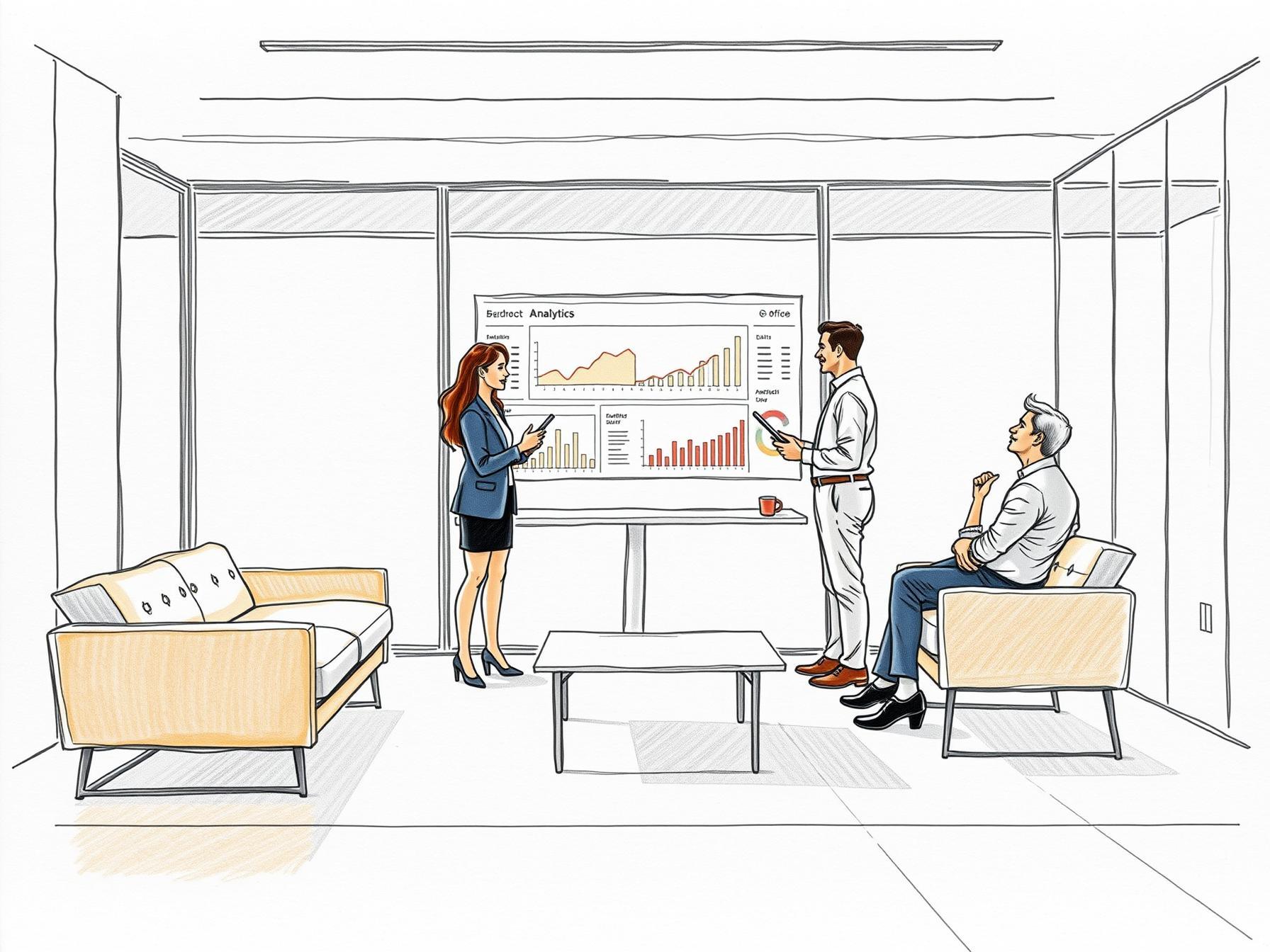
The next critical phase involves selecting and deploying advanced analytics and sales technology tools that deliver actionable customer behavior insights. Forward-looking enterprises utilize customer journey mapping integrated with behavioral data to refine segmentation, health scoring, and territory assignment, significantly enhancing compensation plans and revenue attribution accuracy.
For instance, leveraging machine learning models to analyze customer interactions enables precise prediction of customer lifetime value and sales pipeline velocity across regions or teams. This supports optimized resource allocation and personalized engagement strategies, which are key to driving customer experience and retention. Additionally, incorporating sales automation platforms accelerates data capture and facilitates seamless marketing handoff, streamlining lead qualification and account management processes.
Collaborating with consulting firms ensures alignment of technology selection with long-term business objectives and stakeholder management. As highlighted in a McKinsey & Company Insights report, organizations that embed analytics tools into their sales and marketing operations see measurable uplift in revenue enablement, with substantial improvements in cross-department collaboration and risk mitigation. Consulting partners also provide training blueprints to embed these tools within existing team structures, maximizing utilization and ensuring sustainable performance gains.
Step 3: Implement Change Management and Continuous Training for Adoption

Successful integration of customer behavior analytics hinges on comprehensive change management and ongoing training strategies. Enterprises frequently encounter resistance or inconsistent adoption across sales, marketing, and customer success teams due to fragmented compensation models, territorial conflicts, or legacy workflows. Addressing these organizational dynamics requires executive sponsorship and a clear communication roadmap that emphasizes the value of analytics in driving individual and team performance.
Training programs should be tailored to contextualize tools within existing job functions and compensation frameworks, reinforcing best practices around data hygiene, behavioral insight interpretation, and customer lifecycle management. These programs also enable benchmarking and utilization tracking, critical for continuous improvement cycles. Importantly, change management initiatives must involve key stakeholders from revenue operations (RevOps) and sales leadership to reinforce accountability and align incentives with customer-centric outcomes.
Consulting firms excel in facilitating this cultural transformation by deploying stakeholder management frameworks and customized training curricula. Recent research from Harvard Business Review underscores that companies investing in change enablement alongside technology implementation reduce churn rates and accelerate time-to-value, ultimately safeguarding revenue streams and enhancing customer success metrics.
Overcoming Enterprise Challenges Through Consulting Partnership
Enterprises aiming to integrate customer behavior analytics seamlessly face complex challenges, including legacy system interoperability, data privacy regulations, and fragmentary stakeholder interests. Consulting partners provide the specialized expertise required to navigate these obstacles by delivering tailored roadmap development, agile project management, and scalable platform selection aligned with corporate governance standards.
For example, consultants help design optimal sales territory models integrating behavioral analytics to improve pipeline quality and performance benchmarking, addressing sales technology fragmentation common in large matrix organizations. They also manage risk by ensuring compliance with data protection laws during big data application adoption, reinforcing trust with clients and regulators.
By partnering with consulting experts, organizations benefit from accelerated deployment timelines, enhanced training programs, and sustained change management, thereby maximizing ROI on analytics investments. As reported by Forbes, organizations leveraging such partnerships increase their likelihood of predictive accuracy and revenue enablement by over 40%, supporting executive decision-making with precise data-driven insights.
Maximizing Long-Term Value with Analytics-Driven Customer Success
Integrating customer behavior analytics is not a one-time project but a continuous journey that underpins ongoing customer success and business growth. Companies must embed analytics into their customer lifecycle management processes to maintain health scoring, retention focus, and proactive churn prevention. This requires iterative collaboration between marketing operations, account management, and customer success teams, supported by real-time data feeds.
An analytics-driven approach empowers better revenue attribution for marketing campaigns and sales outreach, improving pricing strategy and upsell identification. Organizations that prioritize this integration can align team incentives and compensation models with clear customer outcomes, fostering a culture of sustained performance improvement. The Economist and TechCrunch have highlighted that companies with mature analytics practices enjoy higher customer satisfaction scores and lower operational costs due to reduced manual workflows and enhanced automation.
Consulting services continue to play a vital role in this maturity process by enabling continuous performance benchmarking and revisiting strategy alignment as market conditions evolve. This ongoing partnership equips business leaders to remain agile and customer-centric in an increasingly data-driven competitive landscape.
For Further Information
Related Stories on the Web
The article on 3 Key Steps to Integrate Customer Behavior Analytics Seamlessly was written to provide executives with practical, actionable guidance for driving successful integration strategies and maximizing business value from customer insights.