


Table of Contents
- Executive Summary:
- Key Takeaways:
- Churn Prevention & Analysis: The Emerging Backbone of Customer-Centric Innovation
- The Strategic Imperative of Advanced Analytics in Churn Prevention
- Leveraging Sales Automation and Revenue Intelligence for Proactive Retention
- Integrating Customer Behavior Data Across Departments to Drive Retention
- Best Practices in Change Management for Sustainable Churn Reduction
- Consulting-Led Roadmaps for Transformative Customer-Centric Innovation
- For Further Information
- Related Stories on the Web
Recent Articles
Churn Prevention & Analysis: The Emerging Backbone of Customer-Centric Innovation
Executive Summary:
In an era where customer loyalty directly impacts revenue growth and strategic positioning, churn prevention and analysis have become indispensable components of customer-centric innovation. This article explores the business value of integrating advanced analytics and consulting expertise to optimize churn management and drive enterprise-wide transformation.
Key Takeaways:
- Implementing predictive analytics and health scoring improves customer retention by enabling proactive intervention at critical moments in the customer lifecycle.
- Cross-department collaboration between marketing, sales, and customer success teams is essential to create seamless journey mapping and effective churn prevention strategies.
- Integrating Revenue Intelligence tools and sales automation enhances forecasting accuracy and pipeline optimization, directly impacting compensation and performance benchmarking.
- Adopting consulting-led change management accelerates technology adoption and stakeholder alignment, ensuring sustainable churn reduction and customer upsell opportunities.
- Embedding churn prevention into customer experience strategy supports account management and revenue enablement, turning retention efforts into growth engines.
Churn Prevention & Analysis: The Emerging Backbone of Customer-Centric Innovation
The Strategic Imperative of Advanced Analytics in Churn Prevention

Enterprises today are increasingly recognizing churn prevention as a critical business capability that must be embedded into their broader customer experience and revenue enablement strategies. Leveraging advanced analytics and forecasting techniques gives organizations a clearer picture of customer behavior patterns, enabling prediction and timely intervention before churn occurs. As McKinsey & Company highlights, companies that effectively use analytics to reduce churn can improve retention rates by up to 30%, resulting in substantial revenue gains.
Many enterprises grapple with siloed data sources and inconsistent performance metrics, creating blind spots in churn risk evaluation. By implementing integrated data strategies — combining sales technology, marketing operations, and customer success metrics — organizations can construct comprehensive health scoring models. These models evaluate risk across multiple dimensions of the customer lifecycle, from onboarding through account management.
Consulting services play a vital role here by helping companies design territory-specific churn prevention frameworks. These frameworks align sales and marketing leads with customer success teams, ensuring the right intervention strategies are applied based on customer segment, risk level, and product usage. The consulting partner’s expertise in stakeholder management and cross-department collaboration accelerates roadmap delivery and unlocks measurable retention improvements.
Moreover, optimization of pipeline activities complemented by revenue intelligence tools enhances the accuracy of churn forecasting and encourages proactive revenue attribution. This systematic approach to churn reduces risk and improves compensation alignment for front-line teams, reinforcing customer retention as a shared organizational goal.
Leveraging Sales Automation and Revenue Intelligence for Proactive Retention
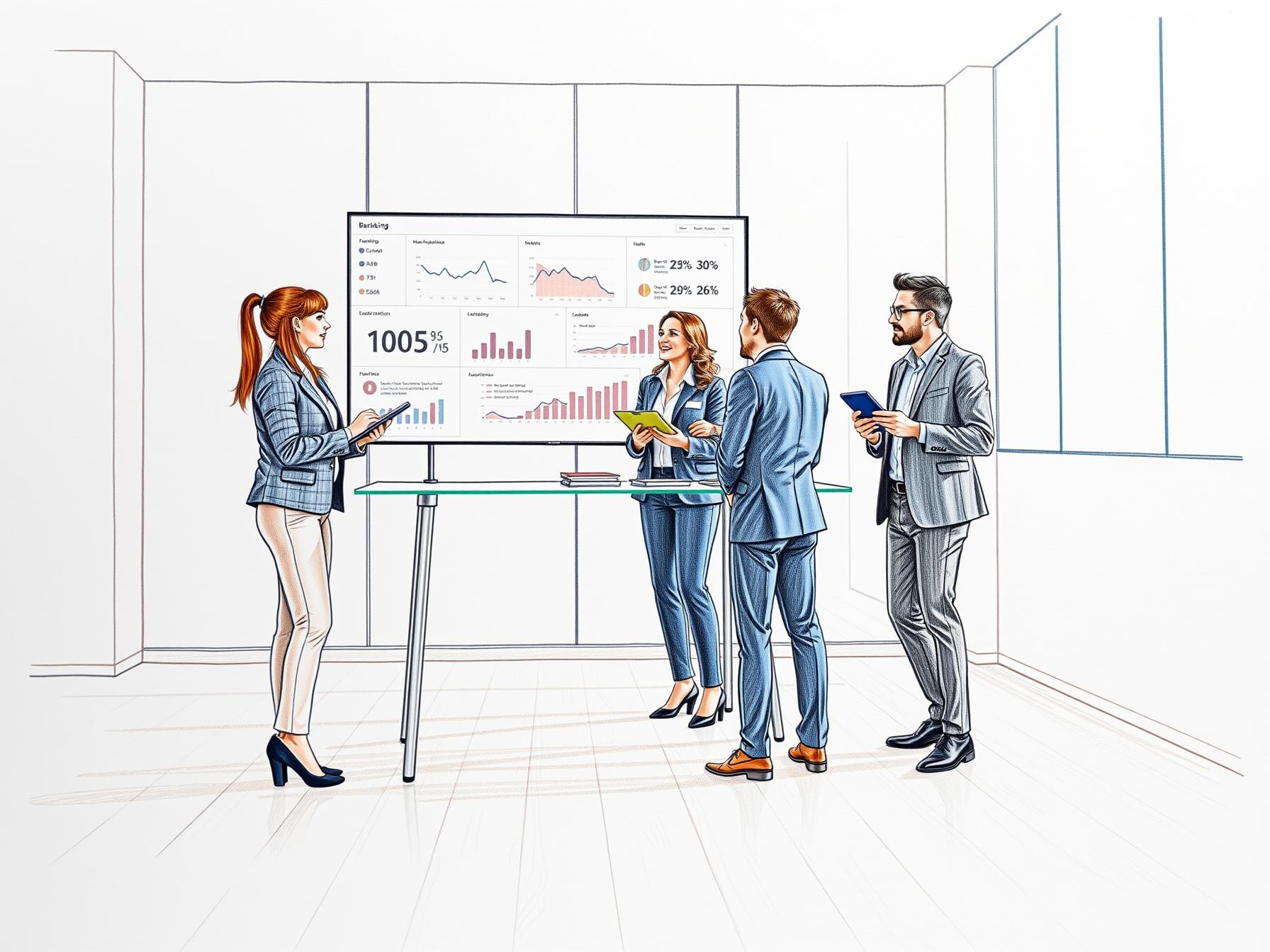
Sales automation and revenue intelligence solutions have transformed how enterprises approach churn prevention by embedding actionable insights directly into sales and account management workflows. These tools enable real-time monitoring of customer engagement, that feeds predictive algorithms to flag at-risk accounts before contract renewal periods. Such AI-driven insights, as described in the Forbes article “How AI Is Driving Customer Retention And Reducing Churn,” arm sales and customer success teams with early warning signals essential for prioritizing retention efforts.
Implementing these technologies requires thoughtful change management and team structure alignment. Consulting firms advise revising compensation and performance benchmarking systems to incentivize proactive churn management, encouraging sales teams to treat retention as priority alongside new pipeline generation and customer upsell. Integrated customer journey mapping further ensures that marketing handoff to sales and customer success is seamless, allowing for continuity in customer experience and lifecycle management.
From a strategic perspective, sales automation reduces manual data entry and improves data fidelity, facilitating robust multi-touch attribution and revenue attribution models that link retention actions directly to financial outcomes. These benefits not only increase operational efficiency but also elevate cross-department visibility into churn risks, fostering collaboration between marketing, sales, and customer success teams. Businesses that have engaged consulting partners report faster time-to-value as automation and intelligence capabilities are customized and integrated across revenue enablement platforms.
Additionally, such solutions support territory and account-specific forecasting, enabling leadership to allocate resources optimally according to churn risk distribution. This data-driven focus aligns with Gartner’s anticipation of top strategic technology trends emphasizing AI-enabled customer-centric innovation in 2024.
Integrating Customer Behavior Data Across Departments to Drive Retention
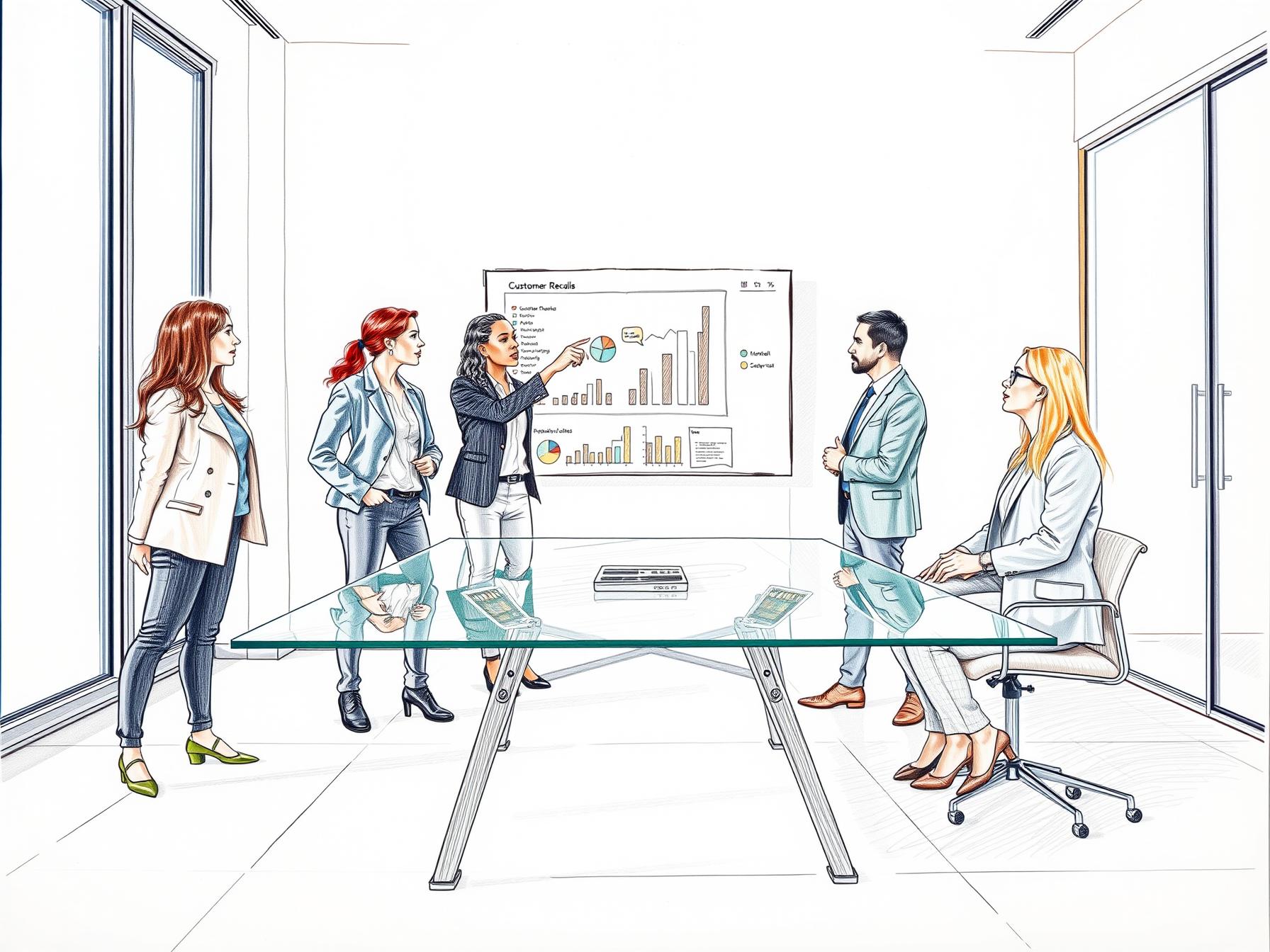
One of the largest challenges in churn prevention is breaking down data silos that inhibit effective cross-department collaboration. Customer behavior data typically resides across marketing systems, CRM platforms, and customer success tools, each tracking different but complementary aspects of the customer journey. Only by unifying this data can companies develop a holistic view of risk and opportunity, enabling more precise churn prevention strategies.
Consulting engagements frequently focus on enabling revenue operations (RevOps) teams to execute integrated data strategies that span marketing operations, sales technology, and post-sale account management. Harmonized data structures fuel health scoring models that take into account not only consumption patterns but also customer sentiment indicators derived through AI-powered analytics tools.
Moreover, the alignment of customer onboarding processes with sales and marketing handoff is critical to set consistent expectations and reduce early-stage churn. Leveraging journey mapping and training programs across teams ensures everyone understands the client’s lifecycle stage and potential risks. This cohesive approach supports stakeholder management by establishing clear accountability and shared KPIs around retention and revenue enablement.
Consulting firms also help enterprises develop customized risk management frameworks that integrate churn data into strategic decision-making at the executive level. By embedding these insights into regular performance reviews, companies can adjust pricing strategies, sales territory alignment, and customer success initiatives in real time. This systemic approach drives both retention and customer upsell, turning churn prevention into a sustainable competitive advantage reflected in revenue forecasting.
Best Practices in Change Management for Sustainable Churn Reduction
Implementing churn prevention tools and strategies is as much a change management challenge as a technological one. Senior leaders must ensure that all relevant teams—from marketing operations through to account management—are aligned and trained on new processes and tools. Without this alignment, even the most advanced analytics and automation investments will fall short of their potential impact.
Consulting capabilities in stakeholder management become invaluable in these transitions by identifying key influencers across departments and fostering collaboration. Often, restructuring team roles and compensation models to emphasize retention outcomes helps embed churn prevention into organizational culture. For example, some clients have revamped their sales territory models to create dedicated roles focused on retention and renewal, supported by specialized training in churn risk detection and lifecycle management.
Performance benchmarking integrated with revenue intelligence dashboards can measure progress and identify areas needing optimization. This transparency builds accountability and drives continuous improvement cycles. Best practice frameworks also stress the importance of ongoing coaching that blends sales automation insights with team collaboration techniques to sustain momentum.
Leadership must also consider the evolving nature of customer experience expectations. As Gartner notes, organizations investing in AI and analytics now are positioning themselves to be customer-centric disruptors in their industries, making churn prevention foundational to long-term success.
Consulting-Led Roadmaps for Transformative Customer-Centric Innovation
Achieving measurable ROI from churn prevention efforts requires an integrated roadmap that covers technology enablement, team structure redesign, and strategic governance. Consulting firms specialize in constructing these roadmaps by combining industry best practices with company-specific realities.
These roadmaps typically start with comprehensive data maturity assessments to benchmark current capabilities and identify gaps in analytics, sales technology, and collaboration workflows. Based on this foundation, a phased implementation plan prioritizes quick wins such as automating health scoring and integrating journey mapping, while planning longer-term investments in AI-driven revenue intelligence.
Cross-department stakeholder engagement is orchestrated to align compensation, forecasting, and pipeline optimization processes with churn prevention imperatives. This ensures new initiatives do not operate in isolation but become part of day-to-day business rhythm. Consulting guidance also underpins scaling efforts, helping enterprises iterate based on performance data and evolving customer needs.
The result is a transformational impact: churn reduction, improved customer experience, and a revenue growth engine that leverages customer upsell and loyalty. The holistic approach aligns well with insights from Deloitte Insights on the future of customer experience, where AI and analytics underpin churn prevention as a core element of innovation strategy.
For Further Information
- Using advanced analytics to reduce customer churn – McKinsey & Company
- How AI Is Driving Customer Retention And Reducing Churn – Forbes
- Gartner Top Strategic Technology Trends for 2024
- The future of customer experience: AI and analytics for churn prevention – Deloitte Insights
- Ireckonu’s AI Research Revolutionizes Hospitality with Timely Churn Prevention Strategies – Travel And Tour World
Related Stories on the Web
- Ireckonu’s AI Research Revolutionizes Hospitality with Timely Churn Prevention Strategies — Travel And Tour World
- Using advanced analytics to reduce customer churn — McKinsey & Company
- How AI Is Driving Customer Retention And Reducing Churn — Forbes
The article on Churn Prevention & Analysis: The Emerging Backbone of Customer-Centric Innovation was hopefully useful in helping you understand more about the topic.
